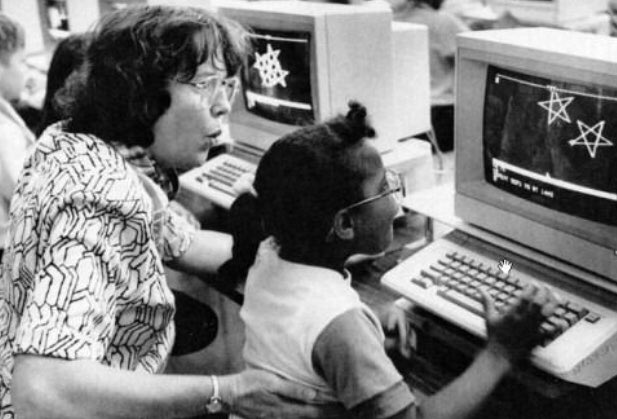
How Apple II dominated US schools through the 1980s and into the 1990s via open hardware, third-party ecosystems, and deliberate educator outreach.
Key Takeaways
Apple held ~50% of the K-12 school computer market by 1984; a 1995 survey found 37.5% of public school computers were still Apple II models.
The Apple IIe’s custom chips cut manufacturing costs enough to sell a complete system for $1,300 in 1984, roughly the same nominal price as a barebones Apple II Plus at launch despite high inflation.
Open hardware specs and eight expansion slots drove third-party hardware proliferation; Radio Shack by contrast excluded outside software from its retail channels.
Apple III bombed due to rushed development, a case designed before finalized hardware, solder shorts from overcrowded boards, and near-zero software at launch beyond VisiCalc.
Wozniak’s post-IPO trajectory included funding the US Festival, returning to Berkeley, and teaching computer skills in the Los Gatos School District as an ordinary engineer.