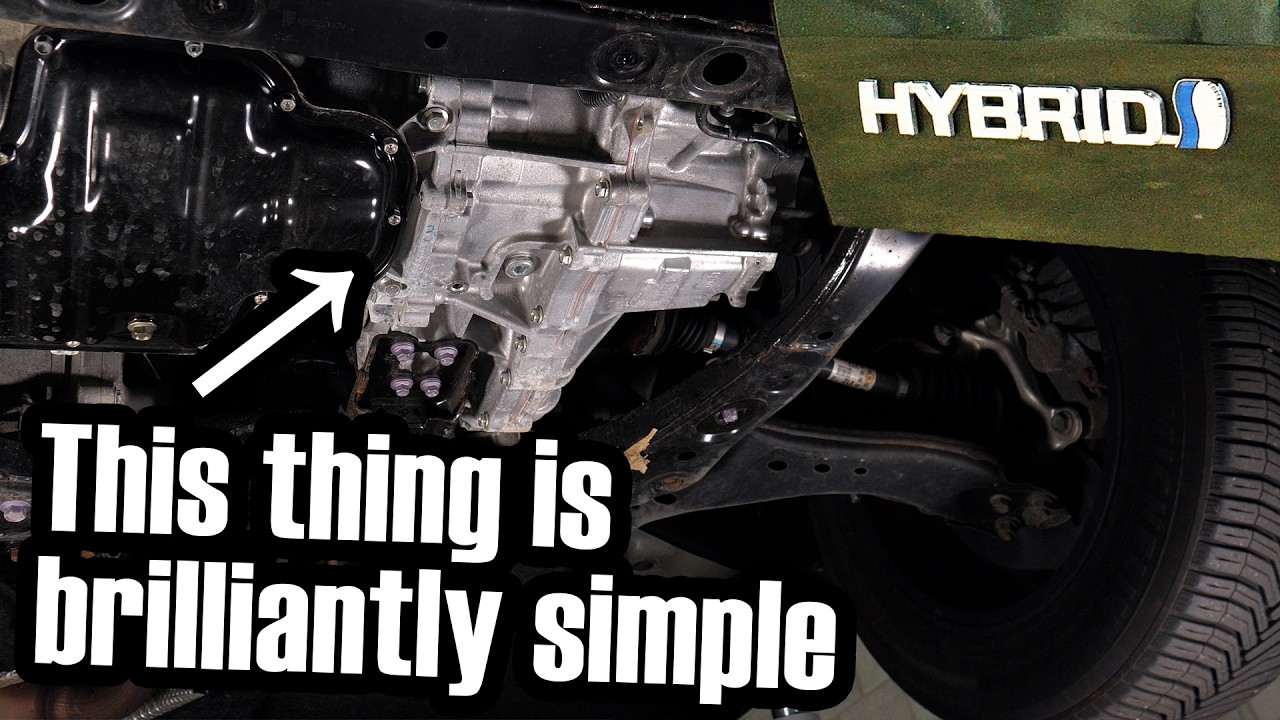
Technology Connections (55-min video) argues Toyota’s hybrid drivetrain is a misunderstood engineering triumph, built around the Atkinson cycle engine and eCVT power-split device.
Key Takeaways
ICEs run inefficiently across most of their RPM/torque range; hybrids fix this by keeping the engine near its brake-specific fuel consumption optimum at all times.
The Atkinson cycle engine trades peak power for efficiency – electric motors cover the deficit, making the tradeoff net positive.
Toyota’s Power Split Device (two motor-generators + planetary gear set) replaces a conventional transmission with fewer moving parts than a manual gearbox.
Regenerative braking and hybrid AWD (second motor on rear axle, no driveshaft) are mechanical bonuses unlocked by the same architecture.
Series vs. parallel hybrid topologies differ significantly; Toyota’s parallel power-split design is the specific target of this explainer.
Hacker News Comment Review
Commenters broadly agree Toyota’s eCVT is in a different class from most manufacturer hybrid systems; Ford’s Kuga/Escape copies the patents and works well, though other brands often just bolt a motor onto an ICE without the elegant power-split logic.
The EV-vs-hybrid debate surfaced: owners with both report EVs eliminate ICE maintenance entirely, but high-mileage used Priuses (194k-225k miles still running) demonstrate hybrid longevity as a distinct value proposition, especially where charging infrastructure is limited.
Toyota opened ~24,000 hybrid patents royalty-free in 2019, so the main barrier to adoption of this architecture is now incumbent investment in inferior designs, not IP.
Notable Comments
@javawizard: Prius exposes MG1, MG2, and engine speeds/torque live on the OBDII port – you can watch the power-split device operate in real time with an app like Torque.
@em500: Interactive slider tool at eahart.com/prius/psd lets you visualize how power is actually split between ICE and motors, clearer than most static explanations.