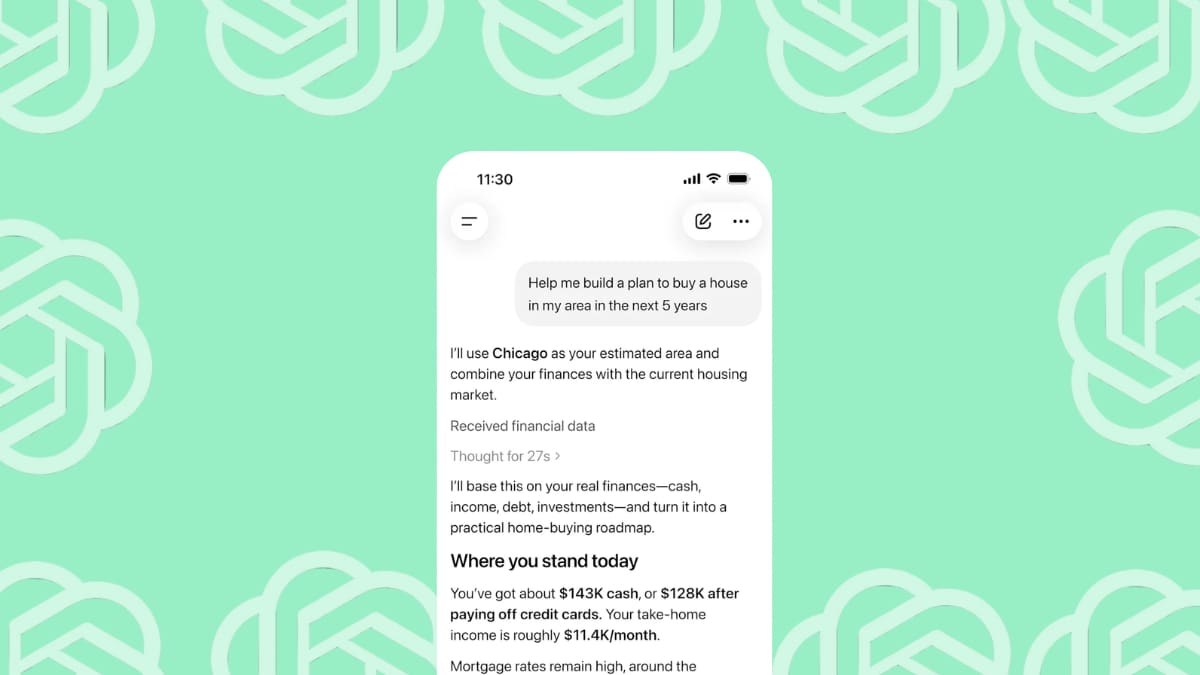
ChatGPT now lets Pro subscribers ($200/mo) link bank accounts via Plaid, exposing balances, transactions, investments, and liabilities to OpenAI.
Key Takeaways
Plaid integration covers 12,000 institutions including Chase, Fidelity, Capital One, and Schwab; read access only, no transfers or full account numbers.
ChatGPT gets balances, full transaction history, active subscriptions, investment portfolio, and liabilities like mortgages and credit card debt.
After disconnecting, OpenAI retains up to 30 days to delete data; the training opt-out default is described as unclear by the source.
OpenAI offers a spending dashboard, personalized financial advice, and anomaly flagging in exchange for access.
No commercial guardrails are disclosed around what OpenAI does with aggregated financial profiles if its business model shifts or restructuring occurs.
Hacker News Comment Review
Commenters are broadly opposed to Plaid itself, independent of OpenAI, citing its credential-sharing model as an obvious step too far even for non-privacy-focused users.
The financial dataset is seen as more dangerous than health data: transaction history can reveal political donations, relationship status signals, vices, and enables shadow profiles of non-users who transact with subscribers.
The dominant framing is that investors, not users, are driving the integration speed, with the product value being real but secondary to the data asset being built.
Notable Comments
@cbg0: Points out transaction data enables shadow profiles of people who never consented, including anyone who sends or receives money from a connected user.
@TheChaplain: Suggests using a dedicated credit union account receiving only salary deposits with same-day transfer out as a sandboxing approach.