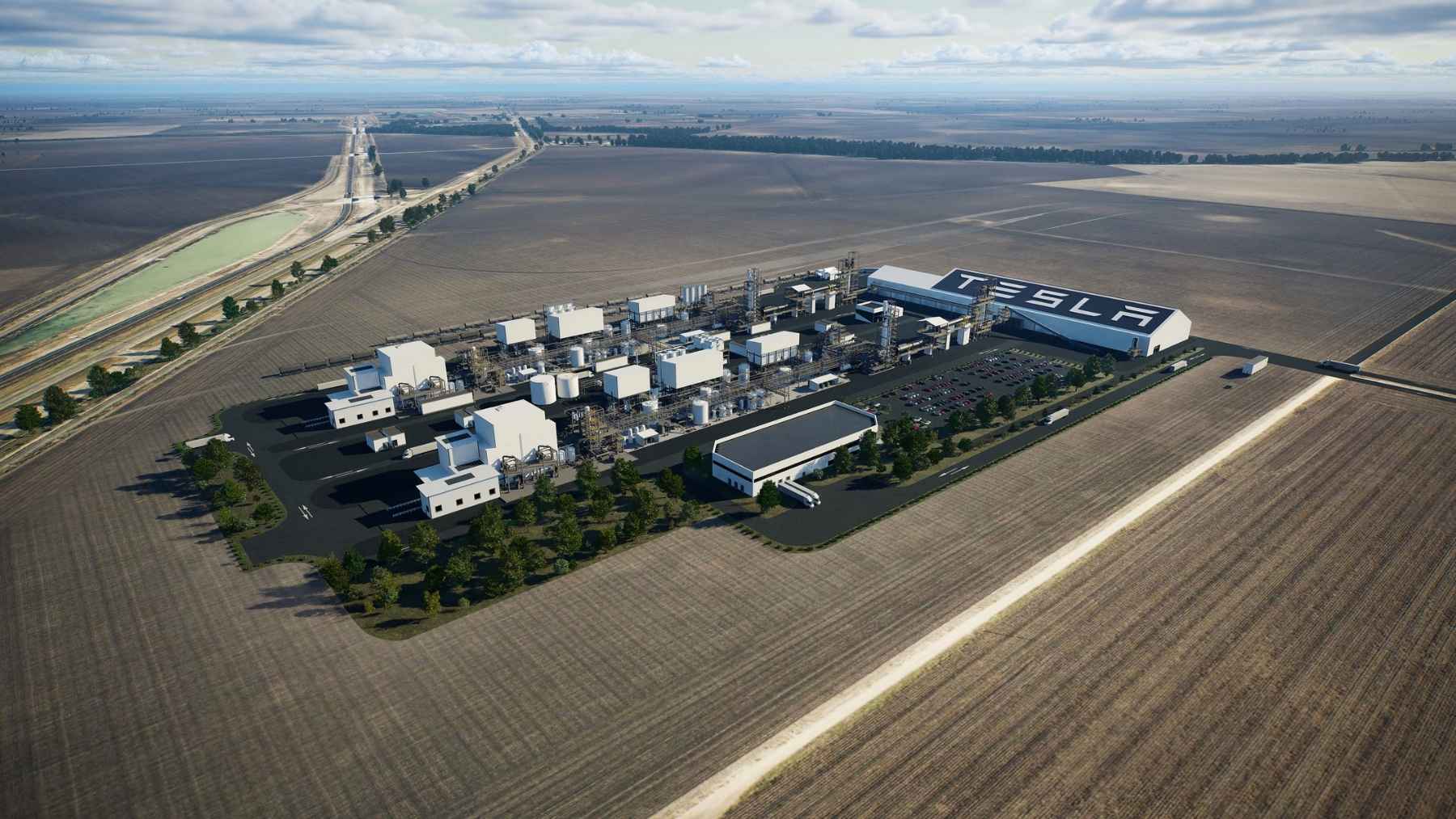
Tesla’s Robstown, TX spodumene-to-lithium-hydroxide refinery, marketed as “acid-free clean process,” was found discharging black wastewater into an unnotified drainage district’s ditch, with independent lab results detecting hexavalent chromium and arsenic.
Key Takeaways
Tesla’s TCEQ-issued TPDES permit (Jan 15, 2025) allows 231,000 gal/day of treated wastewater into an unnamed ditch flowing to Petronila Creek and Baffin Bay; the drainage district was never notified.
TCEQ’s Feb 2026 investigation tested only conventional pollutants and found no permit violation; it did not test for heavy metals or lithium, which the permit does not require monitoring for.
Independent Eurofins lab (April 7 sample) found hexavalent chromium at 0.0104 mg/L, arsenic at 0.0025 mg/L, strontium at 1.17 mg/L, and elevated lithium, vanadium, manganese, and ammonia-nitrogen.
Neither hexavalent chromium nor arsenic appear as allowable pollutants in Tesla’s permit; no law violation has been alleged by any party.
Robstown sits 16 miles from Corpus Christi, which is facing imminent reservoir depletion and expected water-use restrictions by September 2026; elevated salt content is also eroding ditch walls.
Hacker News Comment Review
Core technical dispute: commenters largely agree the detected concentrations are near or below regulatory thresholds, but the permit itself contains no monitoring requirements for the substances found, making “in compliance” a structural gap rather than a clean bill of health.
Tesla’s sampling methodology objection (ditch placement vs. outfall point) was noted as legally relevant; commenters acknowledged it as a real defense, not just PR deflection, though it does not explain the chemical fingerprint.
The property-use issue drew attention: the TPDES permit authorizes discharge to a named water body but does not grant conveyance rights over the drainage district’s easement, which may be the stronger legal lever regardless of pollutant levels.
Notable Comments
@Waterluvian: raised whether diluting wastewater to stay under reporting limits is a viable loophole, pointing at a structural weakness in threshold-based permitting.
@tremon: clarified that a discharge permit to a river does not authorize using any upstream ditch in that basin as a conveyance pipeline.