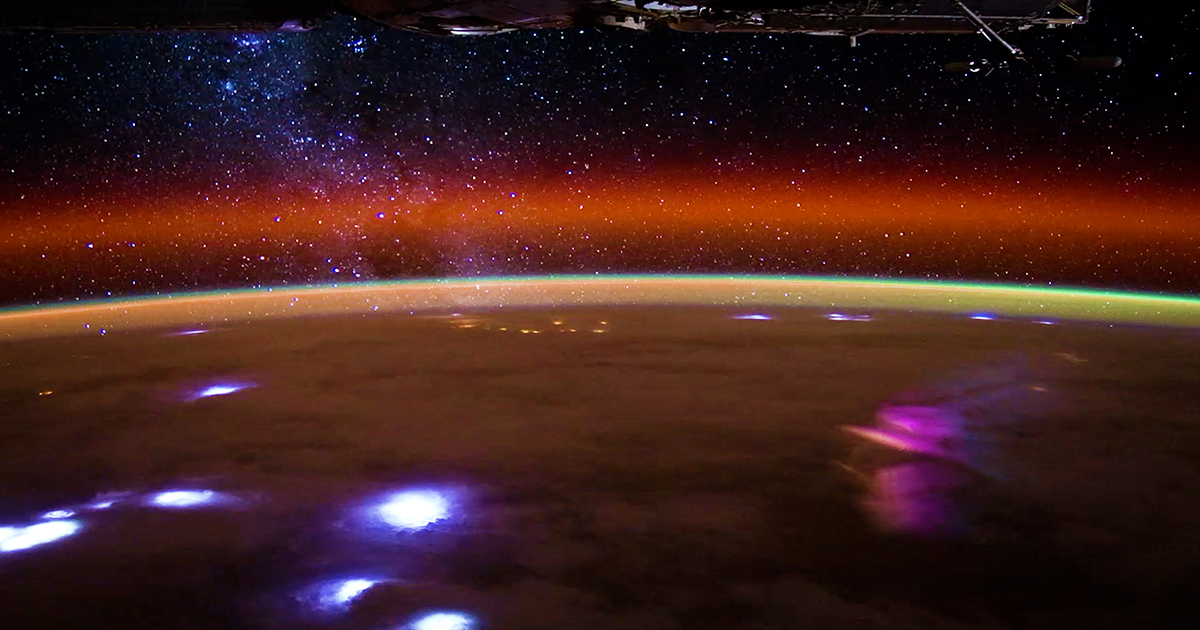
Physicists still cannot fully explain how lightning initiates, and new instruments reveal gamma rays, relativistic electron avalanches, and antimatter inside thunderclouds.
Key Takeaways
Measured thundercloud electric fields reach only one-third the ~3 million V/m threshold needed for conventional electrical breakdown, invalidating the simple spark model.
Ice crystal hydrometeors were once a leading trigger candidate, but detailed simulations showed they don’t get sharp enough to boost fields sufficiently.
Gamma ray flashes from thunderclouds, first detected by a deep-space satellite in 1994, implicated relativistic runaway electron avalanches as a missing mechanism.
Joseph Dwyer’s model: runaway electrons emit gamma rays, which produce positron-electron pairs; positrons loop back and seed new avalanches, creating a self-amplifying cascade.
Consensus is forming that high-energy particle physics processes, more typical of supernovas or colliders, are necessary for lightning initiation.