Everything is Computer

TLDR
- The smartphone’s modular electro-industrial stack – batteries, sensors, compute, connectivity – is the universal blueprint now underlying EVs, drones, robots, and AI hardware.
Key Takeaways
- The “modular middle” of the electro-industrial supply chain – functional subsystems built atop commoditized device primitives – determines cost curves, performance ceilings, and who can build at scale.
- Xiaomi moved from smartphones into a $40,000 EV comparable to a Porsche because smartphone manufacturing already requires mastery of batteries, sensors, compute, and thermal management.
- Chinese firms like BYD, DJI, Sony, Samsung, and LG repeatedly recombine the same electro-industrial competencies – not diversifying, but reapplying a single production model across physical forms.
- Lithium-ion cells perfected for phones enabled EVs; MEMS accelerometers built for screen rotation now stabilize drones; mobile-class processors now fly in spacecraft.
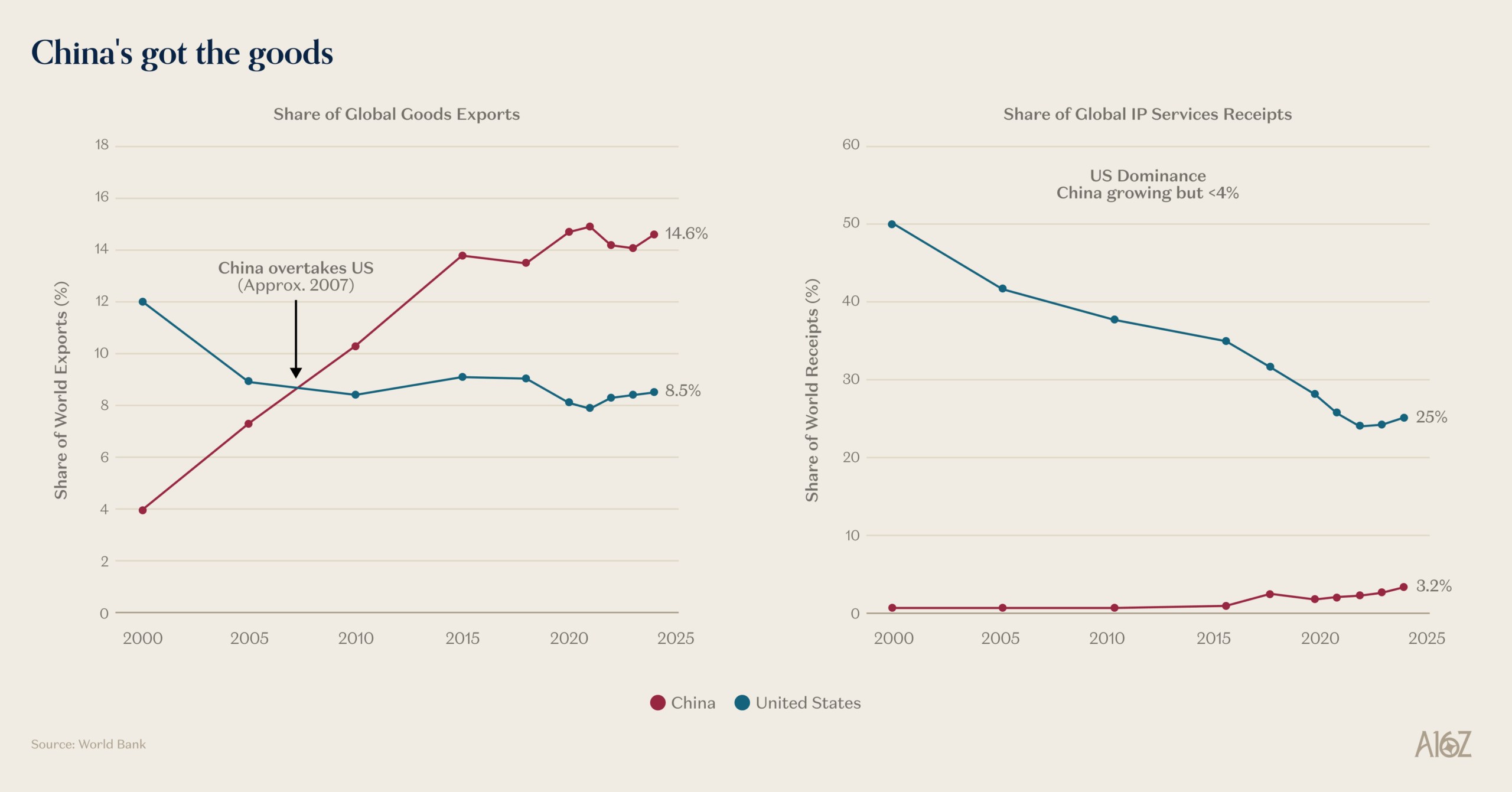
- The US consciously exited manufacturing on the assumption that design and IP retained the real value – but a country that supplies every critical module can assemble the final product itself.
Why It Matters
- Control of the modular middle – not final assembly or brand – sets who can reliably iterate complex products at scale and who cannot.
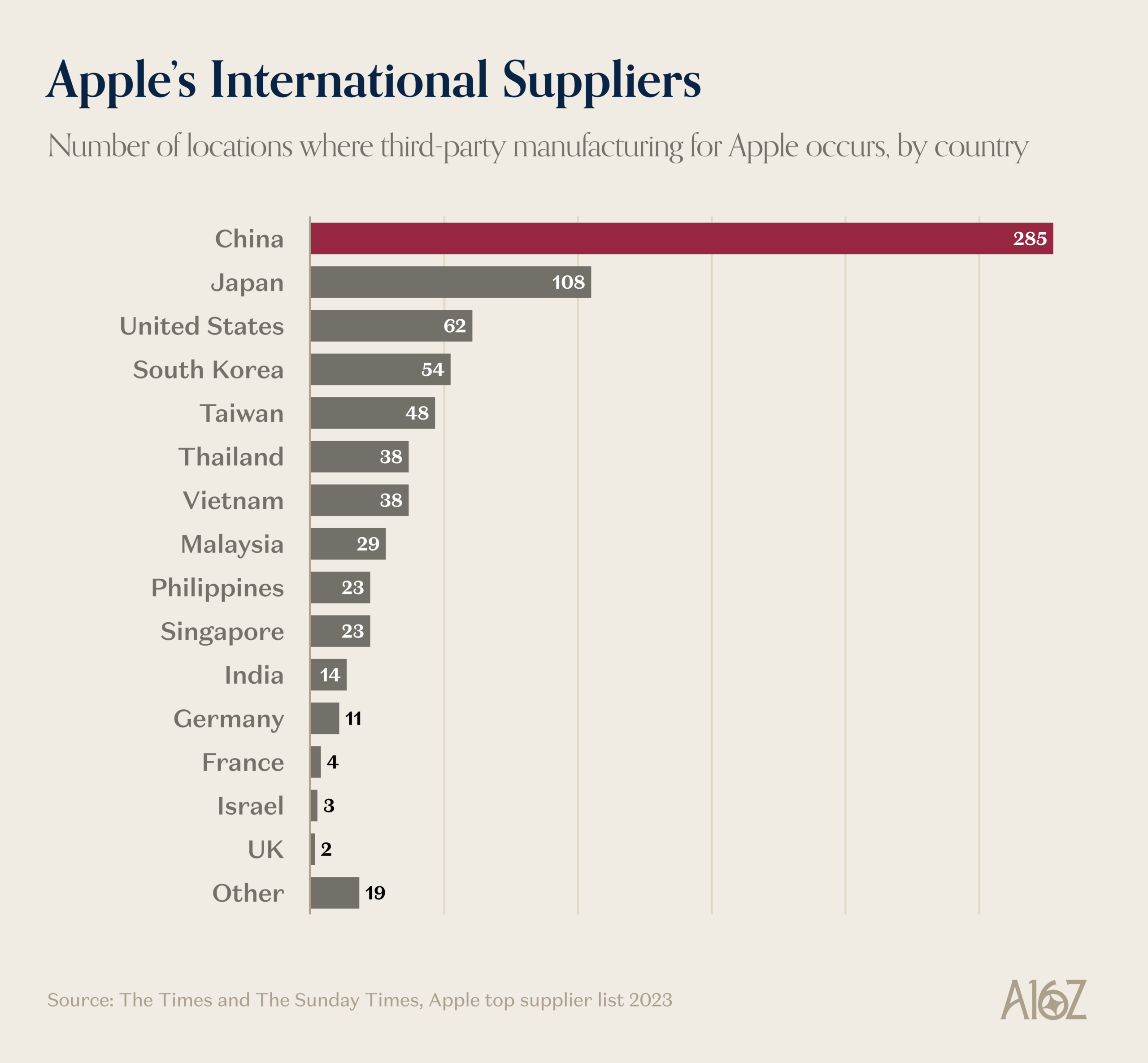
- China’s supplier figures (“China’s Got The Goods”) and Apple’s own international supplier map illustrate how deeply the electro-industrial stack has concentrated outside the US.
- Geopolitical and commercial power this century will track mastery of the electro-industrial stack; the US currently lacks the “missing middle” needed to compete on that axis.
Ryan McEntush, Andreessen Horowitz · 2026-01-07 · Read the original