Prediction Markets: They Grow Up So Fast

TLDR
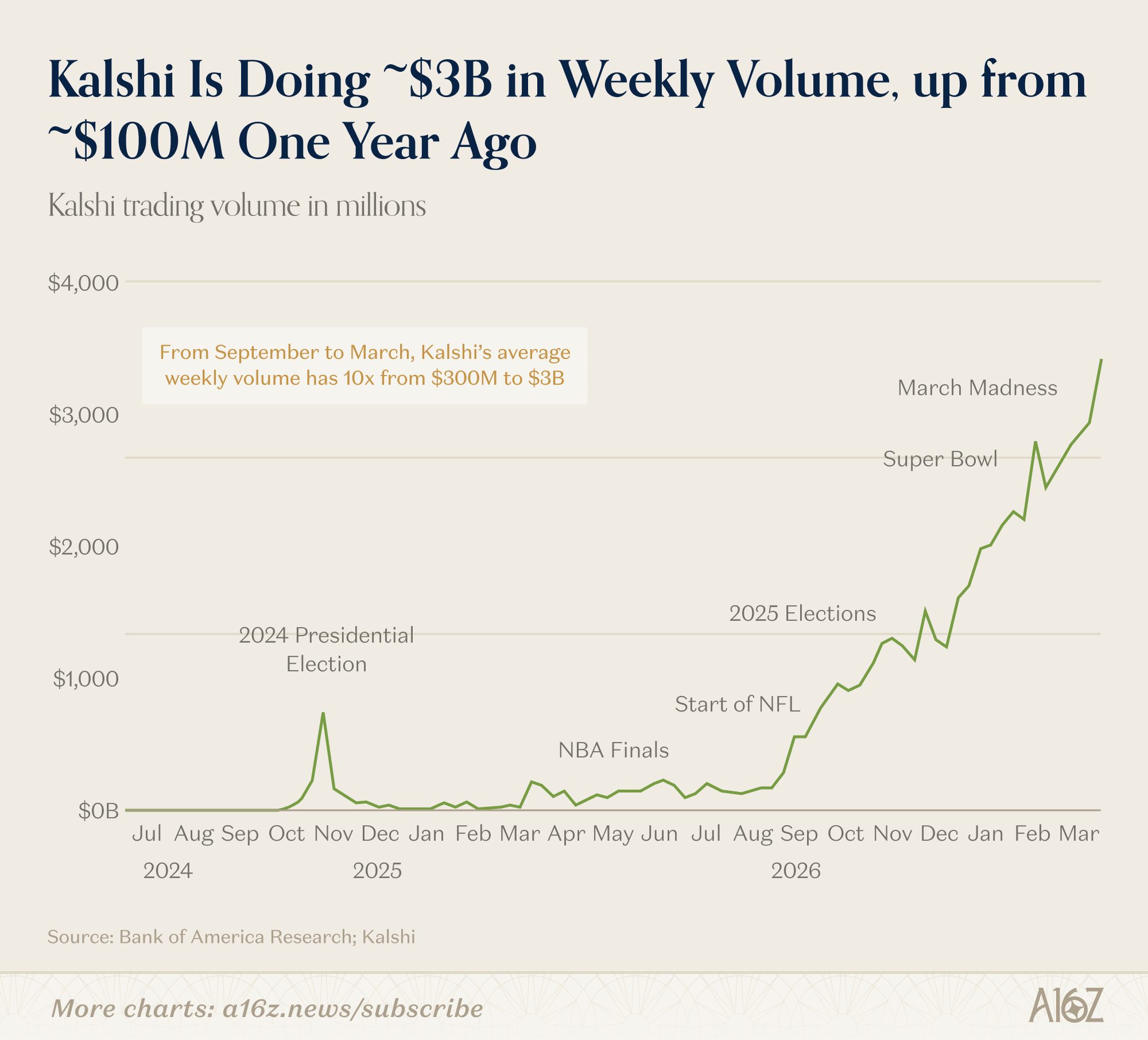
- Prediction markets are moving from election/sports novelty toward institutional infrastructure, with Kalshi processing nearly $3B in weekly sports volume alone.
Key Takeaways
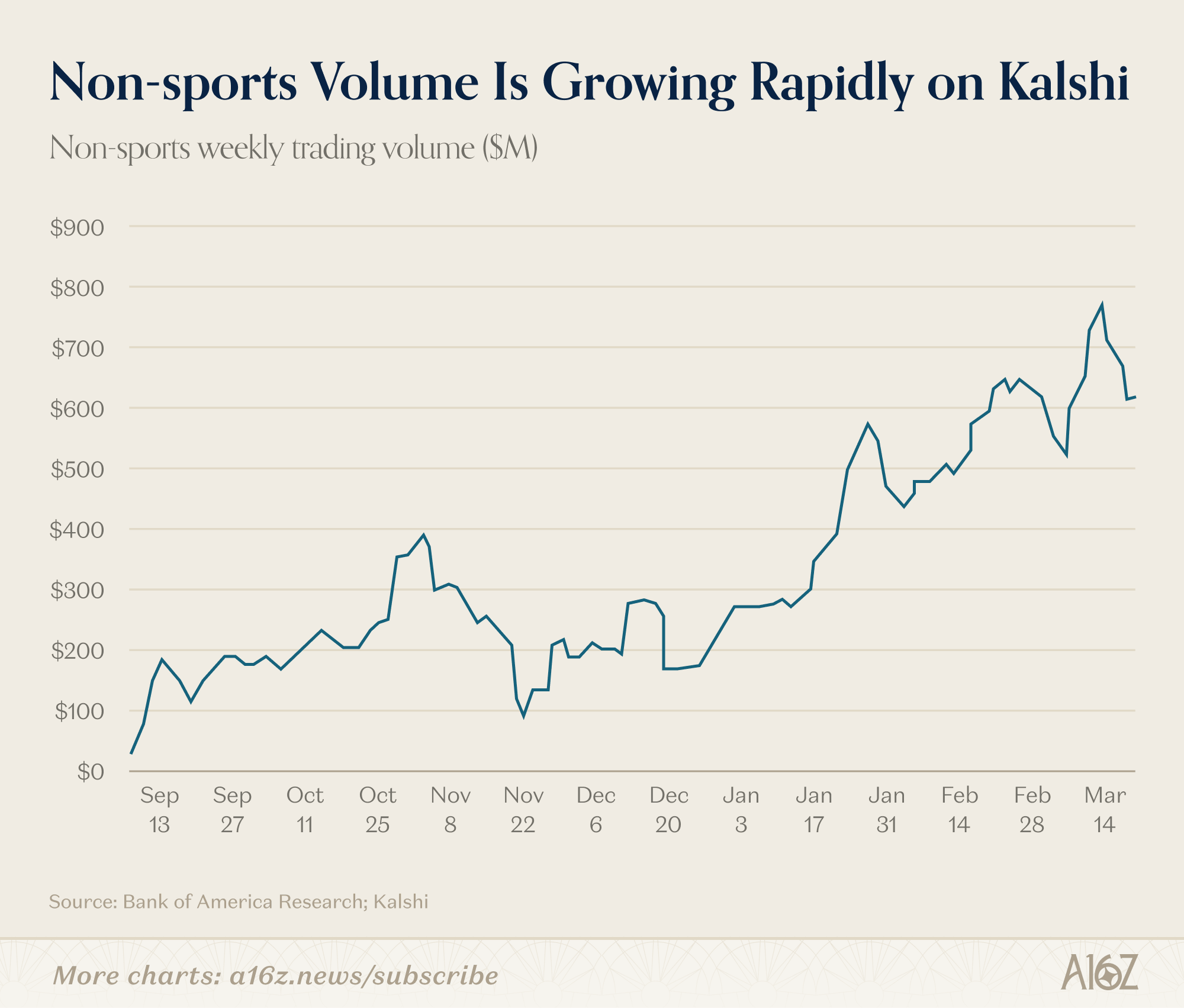
- Sports trading hit an all-time low as a share of Kalshi volume; entertainment, crypto, politics, and culture now outpace it on retention cohorts.
- Goldman Sachs, Tradeweb, and CNBC are already using prediction markets for macro signals: CPI, Fed chair odds, non-farm payrolls.
- Full collateral requirements (a $100 bet demands $100 deposited) block leveraged institutions; Kalshi secured NFA licensing to introduce margin trading.
- Institutional adoption follows three stages: data consumption, compliance integration, then actual risk transfer – most firms are still at stage one.
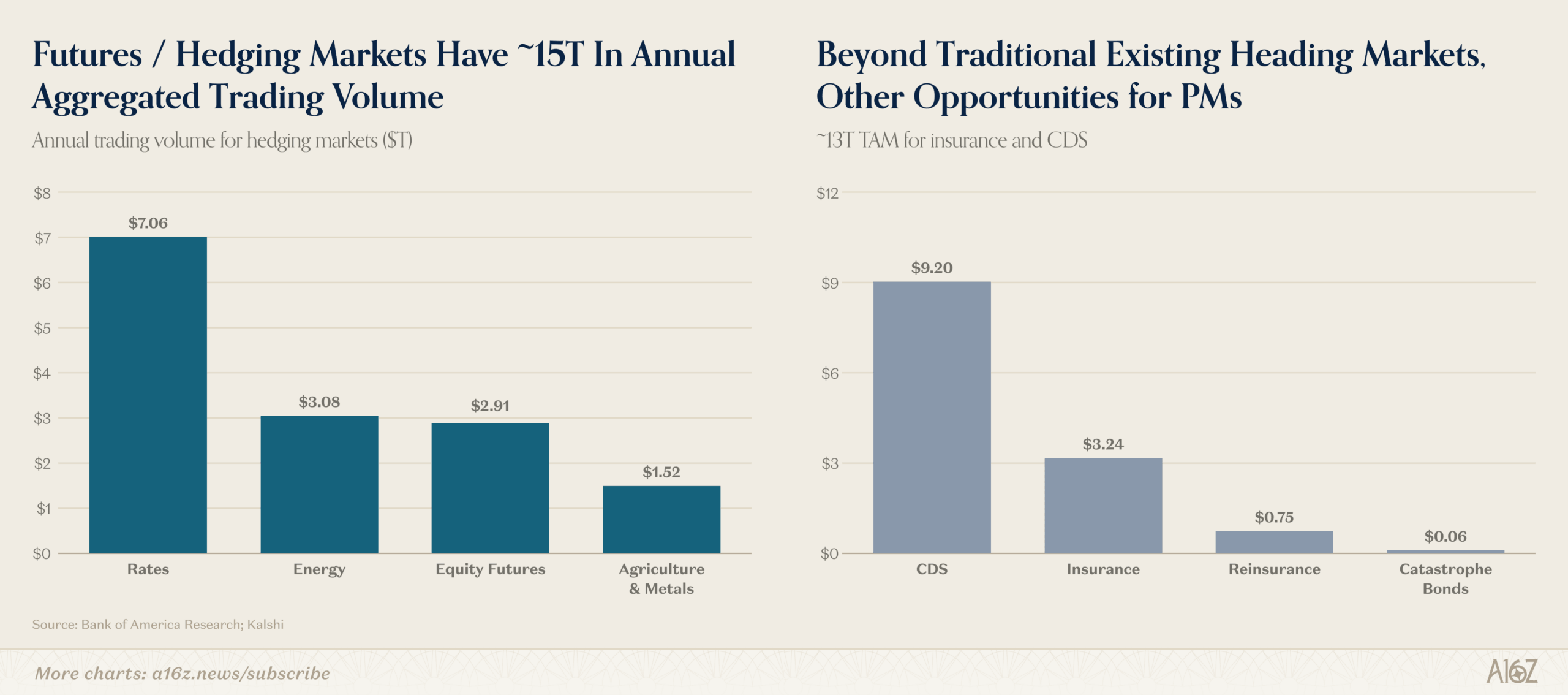
- Hedging markets globally clear roughly $15 trillion annually, framing prediction markets as a small fraction of an addressable institutional pool.
Why It Matters
- Congressional leaders and party committees now cite Kalshi odds publicly, signaling regulatory and political normalization beyond retail speculation.
- Bloomberg’s Michael McDonough framed the end state as these markets becoming “boring” – the same trajectory options took after the 1970s.
- Margin trading access is the near-term unlock: without it, large institutions cannot efficiently deploy capital at scale.
Alex Immerman and Santiago Rodriguez, Andreessen Horowitz · 2026-04-16 · Read the original