The Palantirization of Everything

TLDR
- Startups copying Palantir’s forward-deployed engineer model risk becoming expensive services businesses without the platform, capital, or market conditions that made Palantir work.
Key Takeaways
- FDE job postings are up 800-1000% in 2025 as AI startups embed engineers to close seven-figure enterprise deals that stall without hands-on implementation support.
- Palantir’s actual moat is 100s of reusable microservices (Foundry, Gotham, Apollo, AIP, Ontology) built over a decade, not the embedded-engineer aesthetic startups are copying.
- The FDE model is economically justified only where stakes are extreme: Palantir’s early markets were counterterrorism, battlefield logistics, and fraud detection, not mid-market SaaS optimization.
- Without a product spine underneath, hundreds of bespoke $10M deployments compound into an Accenture-style services business trading at software multiples it cannot sustain.
- Palantir’s contracts start small (bootcamps, limited licenses) and layer in workflows over time until revenue tilts toward software subscription rather than services, a discipline most imitators skip.
Why It Matters
- Founders pitching “Palantir for X” must distinguish platform-first delivery from project-first delivery; only the former generates increasing returns and durable switching costs.
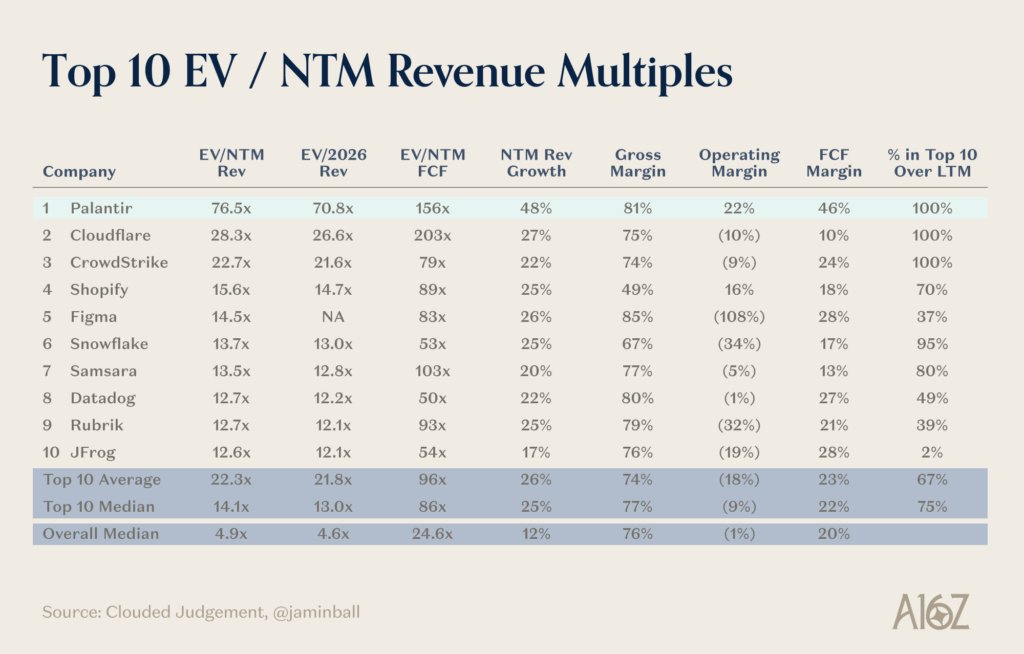
- Palantir trades at 77x forward revenue because it combines integrated product platforms, embedded elite engineers, and mission-critical government contracts simultaneously, a combination most companies cannot replicate even one leg of at scale.
- The talent constraint is real: Palantir’s FDE model depends on generalists who write production code and navigate C-suites and regulators, and that pool is narrow even as AI tooling democratizes coding.
Marc Andrusko, Andreessen Horowitz · 2026-01-16 · Read the original