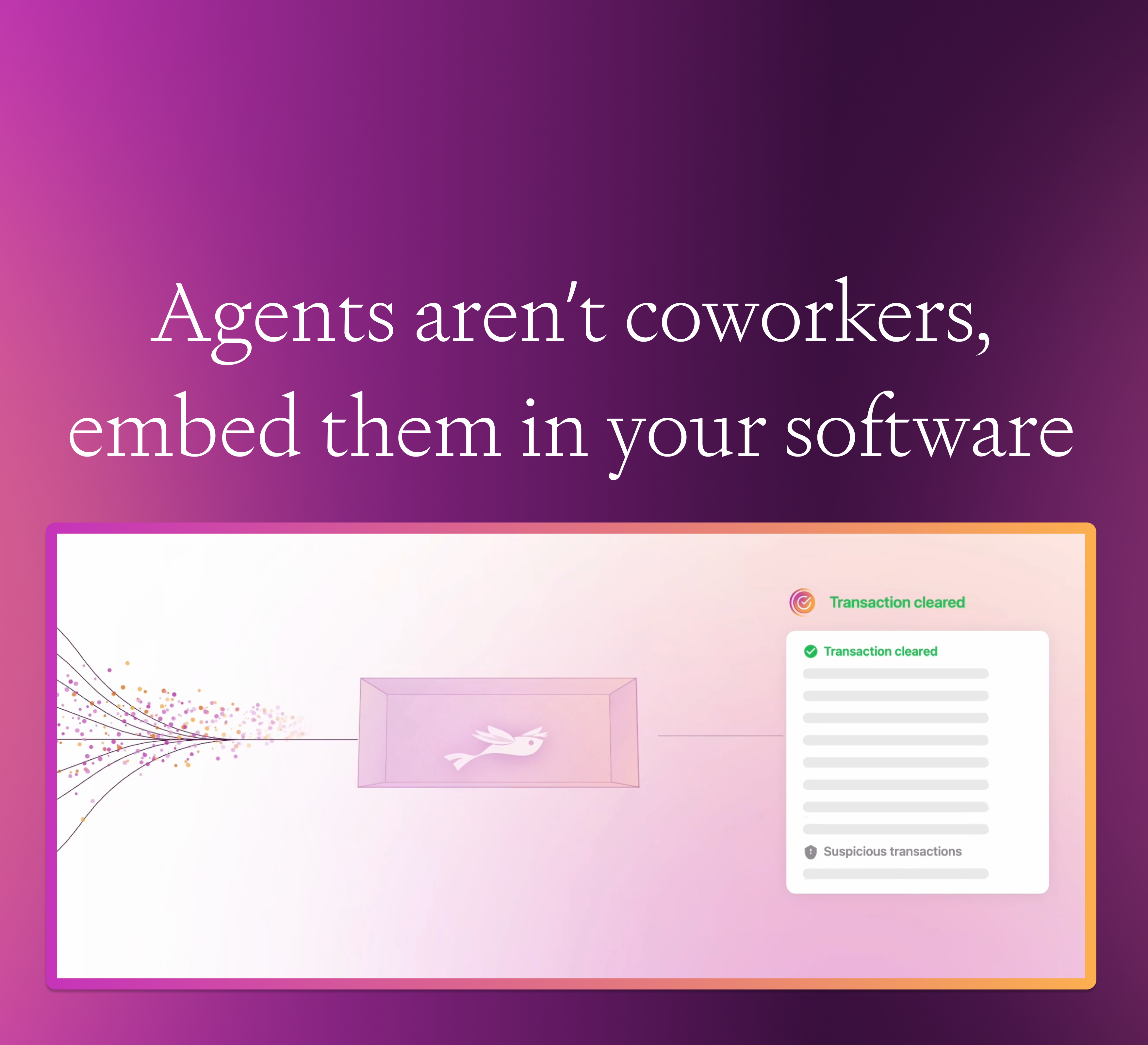
AI agents work better as ambient software components reacting to change in the background than as conversational coworkers requiring constant back-and-forth.
Key Takeaways
The coworker framing fails: chat-style agents that explain, summarize, and negotiate are high-noise and high-supervision by design.
Weiser’s “calm technology” is the better model: give agents proper interfaces and they can operate without surfacing themselves.
Three prescribed patterns: CLI for token-efficient interaction, declarative specs for desired-state artifacts, and reconciliation loops for continuous convergence.
The ambient framing shifts agent design from output-on-demand to event-reactive background process.
Hacker News Comment Review
Commenters split hard on the ambient premise: the concept of background agents with the right interfaces resonated, but reliability and determinism of LLMs at runtime drew sustained pushback.
Multiple commenters caught factual errors in the article itself, including a garbled timeline on Moltbot, OpenClaw, and AutoGPT that eroded trust in the argument before it landed.
The prescribed patterns (CLI, specs, reconciliation loops) read to skeptics as standard DevOps and Kubernetes-style infra patterns, not agent-specific insight, weakening the ambient thesis.
Notable Comments
@apsurd: Summarizes the article’s concrete prescriptions as CLI + declarative specs + reconciliation loops, then notes these don’t actually describe ambient behavior.
@skybrian: Prefers agents that write code and exit over software with a runtime LLM API dependency, citing cost and unreliability.
@ori_b: “I’d pay more for deterministic, explainable, and fast software without agents.”