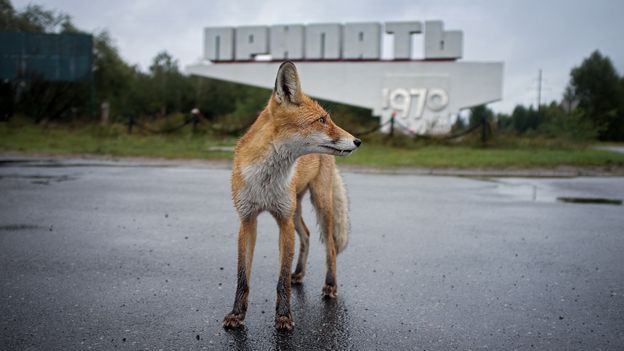
Forty years after the 1986 disaster, Chernobyl’s exclusion zone hosts flourishing wildlife, but with measurable biological changes including altered coloration in tree frogs near the reactor.
Key Takeaways
Evolutionary biologist Pablo Burraco (Doñana Biological Station, Spanish National Research Council) found tree frogs near the plant darker than conspecifics from cleaner zones.
The 60km exclusion zone’s enforced human absence appears to be the primary driver of ecological recovery, not radiation tolerance.
Wildlife is described as living “quite happily” in the zone, but the article notes some changes are “for the worse” – recovery is not clean or uniform.
The frog study frames the core open question: whether observed biological differences are adaptive evolution, plastic responses, or random drift under radiation pressure.
Hacker News Comment Review
Strong commenter consensus that human removal, not radiation resilience, explains the wildlife rebound – the 60km circle sustaining large herbivore populations without migration surprised several readers.
One technically-minded commenter flagged a factual error in the BBC piece: the claim that radioactive isotopes emit meaningful macroscopic heat that stresses wildlife is physically wrong – the energy dissipates far below detectable thermal thresholds.
Commenters drew a pointed contrast between Chernobyl’s sustained cultural footprint (TV series, games, books) and near-silence on Fukushima, flagging it as a media asymmetry worth examining.
Notable Comments
@mianos: Calls out a specific BBC claim that radioactive contamination creates heat stress for wildlife as physically incoherent – useful flag if you’re citing the source.
@jl6: “It’s embarrassing for humanity that we cause an almighty ecological disaster and then one of the biggest factors in the recovery of local ecosystems is our absence.”
@vmxdev: Notes Fukushima is a comparable accident that gets a fraction of the cultural attention – no clear explanation offered, but the asymmetry is real.