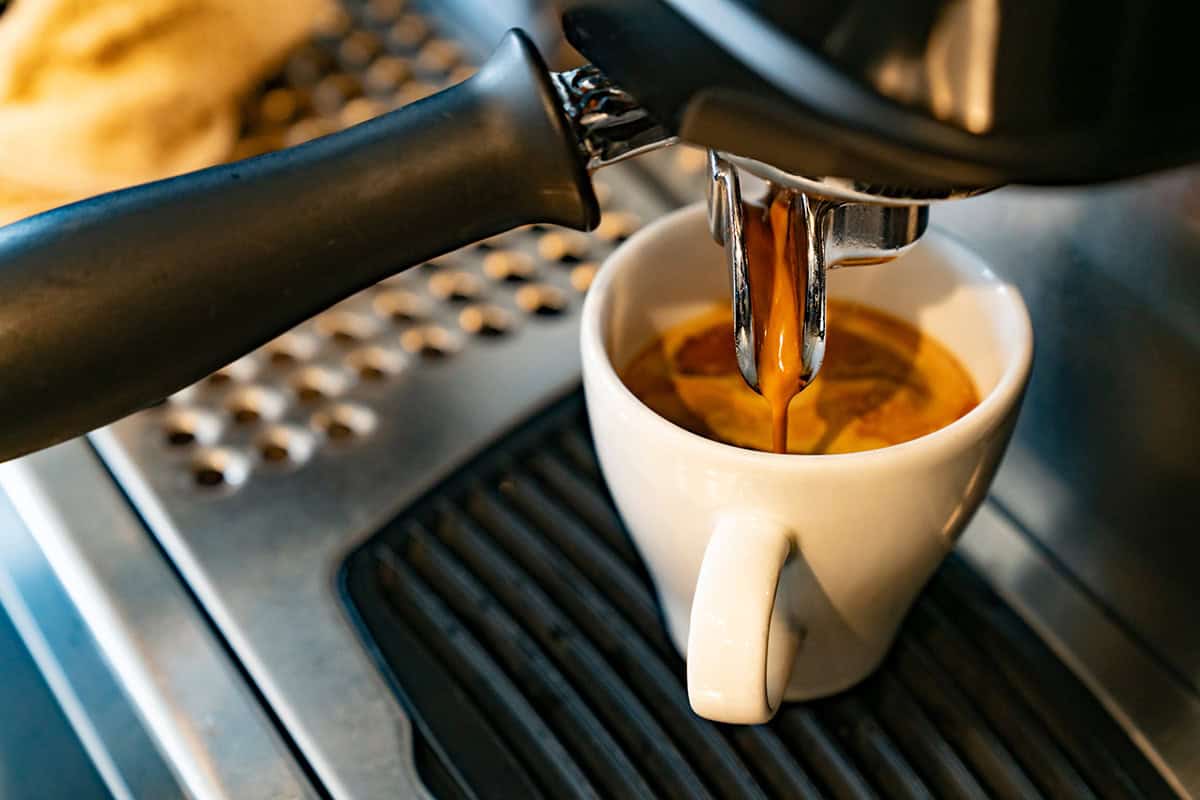
Physics World investigates how fluid dynamics, poroelasticity, and grind science can reduce coffee waste as Arabica bean prices surged 80% in 2024.
Key Takeaways
Espresso pucks behave poroelastically: above ~5 bars, puck compaction collapses pores faster than rising pressure can increase flow, capping useful extraction around 8-9 bars.
Channelling (water finding a path of least resistance through the puck) tanks dissolved solids extraction; even tamping and stirring grounds before tamping are the primary mitigations.
Most dissolved solids enter the cup within the first 30-35 seconds; peak extraction rate hits a sweet spot around 15-20 seconds due to the tradeoff between rising flow rate and falling solids concentration.
Counterintuitively, finer grinds past a threshold reduce extraction quality by clogging the bed unevenly; coarser grinds with more water produce more reproducible shots.
X-ray micro-CT scans of pucks before and after brewing confirmed that fine grinds slow but uniform water infiltration, while coarse grinds allow faster but less uniform permeation.
Hacker News Comment Review
Commenters pushed back on the coarser-grind recommendation, noting it conflicts with the conventional 20-30 second shot target and that lower concentration can ruin the cup even if total extracted mass increases.
Experienced voices argued that sourcing quality and roast level dwarf technique: without good beans at the right roast, no physics-informed tamping recovers the brew.
A machine-side workaround surfaced: flow-control machines with a group-head pressure gauge let you pre-saturate the puck at low pressure to eliminate dry pockets before ramping, sidestepping the poroelastic ceiling.
Notable Comments
@roflyear: professional roaster argues sourcing and roast level account for 98% of cup quality; technique cannot compensate for poor inputs.
@deckar01: flow-control machines let you saturate at low pressure then ramp; notes coarse-grind 6-bar approach maximizes extracted mass but tanks concentration.
@urxvtcd: points to Jonathan Gagné’s “The Physics of Filter Coffee” as a full-length reference; flags the article’s moka-pot/AeroPress comparison to espresso as misleading.