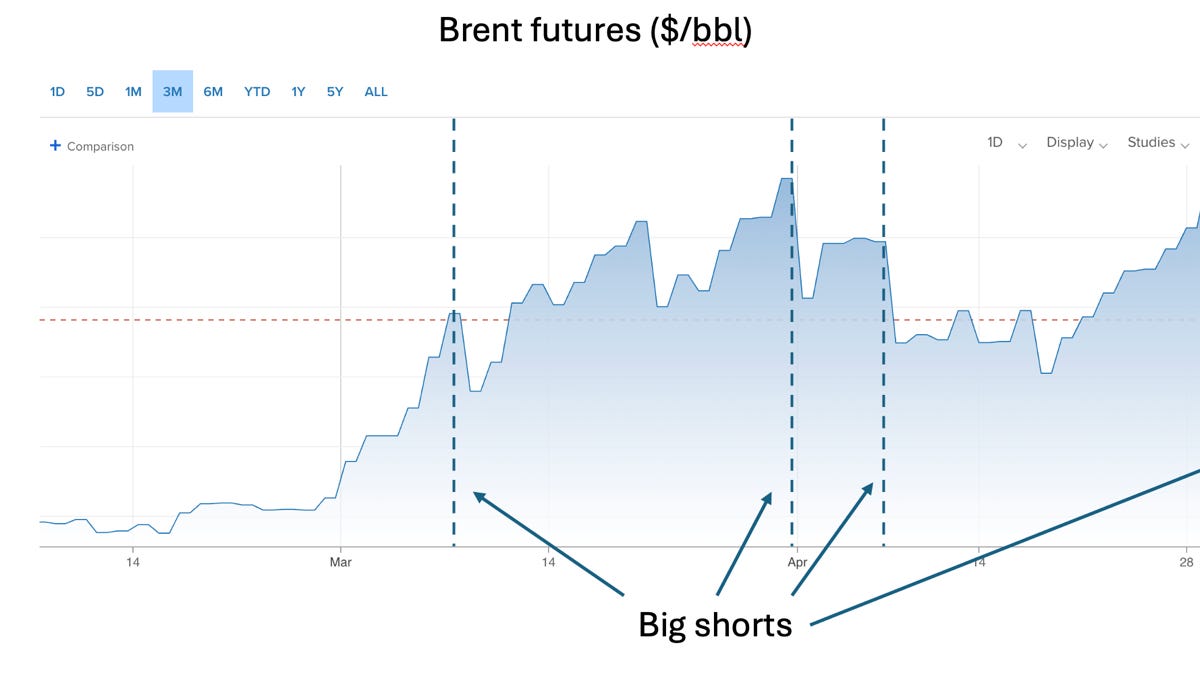
Massive crude oil short positions worth ~$920M appear 70 minutes before Trump Iran-deal news, a pattern repeated enough to signal systemic insider trading.
Key Takeaways
The Kobeissi Letter documented ~10,000 crude oil contracts shorted at 3:40 AM ET; 70 minutes later, Axios broke the US-Iran “memorandum of understanding” story; shorts gained ~$125M.
Oil prices swung -12% then +8% within hours as Iran launched the “Persian Gulf Strait Authority,” showing how policy announcements directly move futures.
The futures market exists to let airlines, oil producers, and other real-economy players hedge price risk; persistent insider trading degrades that function by making counterparties fear they are playing a rigged game.
The author argues this is part of a broader “predation economy” where political connections replace market skill, suppressing growth and market trust.
No enforcement action has followed repeated documented instances, suggesting deliberate non-prosecution rather than investigative lag.
Hacker News Comment Review
Commenters broadly agree the two-tier legal system is the core issue: retail insider trading triggers prosecution, but trading on geopolitical foreknowledge tied to Truth Social posts goes unpunished.
Skeptics note that commodities futures losses from insider trading are structurally different from equity insider trading; the hedging argument is real but the dollar damage to market function is hard to quantify.
A recurring thread argues the price swings are not costless abstractions: they reflect real military and humanitarian outcomes, making the corruption morally distinct from typical market manipulation.
Notable Comments
@SoftTalker: frames retail futures participation bluntly: without inside info or physical commodity exposure, you are the sucker.
@clarkmoody: “Insider trading laws are for the plebs” – sharp contrast between DOJ prosecution of law-firm tip schemes versus zero action on war-adjacent trades.