Crude oil refining chains atmospheric distillation, catalytic cracking, vacuum distillation, and reforming to convert raw petroleum into fuels and chemical feedstocks.
Key Takeaways
Atmospheric distillation is the universal first step: crude is heated to 650-750°F, vaporized, and fractionated by boiling point in a single column.
Catalytic cracking (mostly fluid catalytic cracking) splits heavy residuals into lighter, higher-value fractions like gasoline; a cyclonic separator recycles the sand-like catalyst.
Vacuum distillation runs near-vacuum pressure to distill the heaviest bottoms without triggering cracking reactions that would disrupt yields.
Cokers handle the very heaviest molecules unfit for cat cracking, producing lighter fractions plus solid coke used in aluminum smelting electrodes.
Petroleum supplies 90% of chemical feedstocks and 30% of all global energy; virtually all plastics, lubricants, and synthetic fertilizers trace back to crude oil.
Hacker News Comment Review
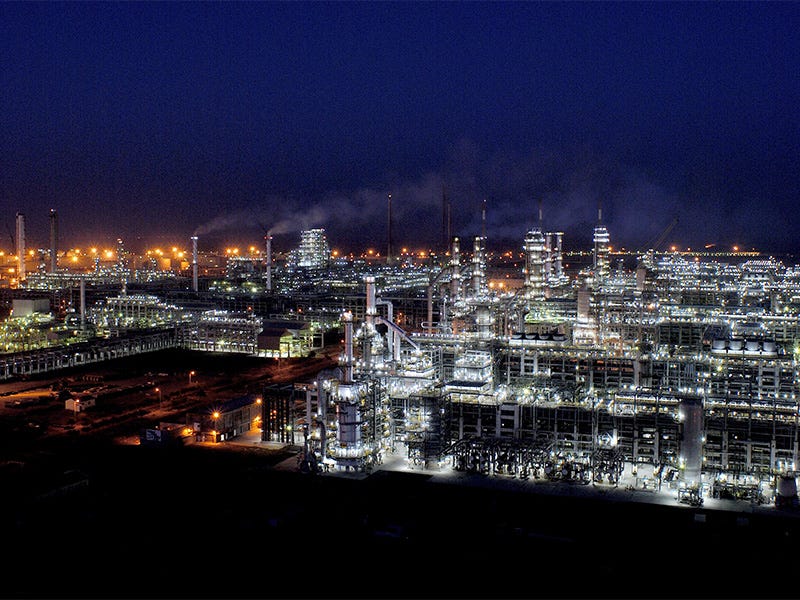
Commenters with direct industry exposure (refinery tours, growing up at Jamnagar) noted the striking absence of on-site workers during full operation, underscoring high automation levels not detailed in the article.
A recurring thread pointed to crude-oil taxonomy surprises: the Akkadian etymology of “naphtha” and how the term spans diesel, kerosene, and gasoline depending on context, signaling that feedstock naming conventions are messier than refinery diagrams suggest.
Gamers flagged that Factorio and GregTech model refinery processing chains with meaningful accuracy, and one commenter surfaced SimRefinery, a 1993 Maxis title built for Chevron, as a hands-on mental model for the full process.
Notable Comments
@ChristopherDrum: Points to SimRefinery (built for Chevron) and its archived manual as a playable refinery simulation worth loading for process intuition.
@t_tsonev: Flags the “primary energy fallacy”: the article does not account for the large share of petroleum energy lost as waste heat before useful work.