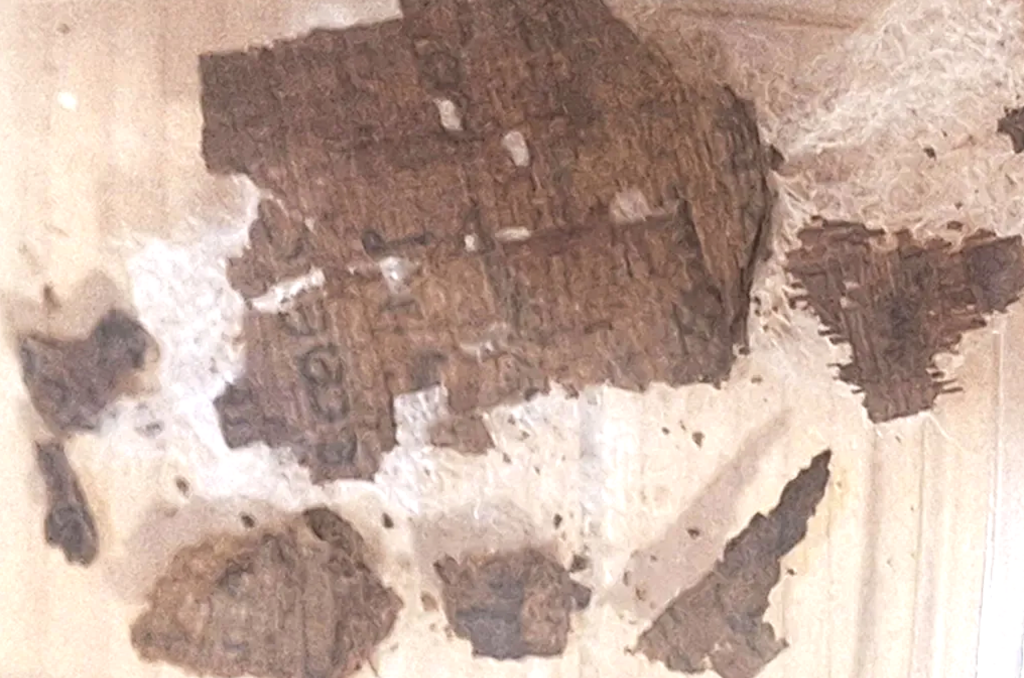
A papyrus fragment of Homer’s Iliad Book 2 (the Catalogue of Ships) was found inside mummy wrappings at Oxyrhynchus, Egypt, by a joint University of Barcelona and Institute of the Ancient Near East team.
Key Takeaways
The fragment contains the “Catalogue of Ships” from Iliad Book 2, listing Greek forces arrayed against Troy.
Discovery site is Oxyrhynchus (modern El-Bahnasa, Minya Governorate), a Roman-era necropolis with multiple burial types including gold-tongued mummies.
The joint Spanish-Egyptian excavation also recovered cremated remains, terracotta and bronze statues of Harpocrates and Cupid, and cat mummies from a nearby Ptolemaic-era section.
Several mummies had gold or copper tongues placed in their mouths post-mummification, plus gold leaf applied after wrapping.
Tomb 65 was partly looted in antiquity, limiting the condition of wooden coffins and some mummified remains.
Hacker News Comment Review
Commenters emphasized Oxyrhynchus as an exceptionally productive papyrus site; its ancient landfill and Egypt’s dry climate together explain why so many Ptolemaic and Roman-era texts survive there at all.
The article omits the fragment’s date and how it compares to other known Iliad copies, a gap commenters flagged as the most useful missing context; the earliest complete Iliad manuscript (Venetus A) dates to around 950 CE.
Discussion surfaced the 19th-century practice of burning mummies as locomotive fuel, framing it as an irreversible data-loss event analogous to the destruction of the Library of Alexandria.
Notable Comments
@varjag: “On the timescale it’s like getting buried today with a copy of Beowulf” – sharp calibration of the cultural distance involved.
@andsoitis: Notes that Iliad 2.645-670 places ships from Rhodes and Crete at Troy, roughly 1000+ years before these mummies were wrapped, threading a direct textual loop back to the region.