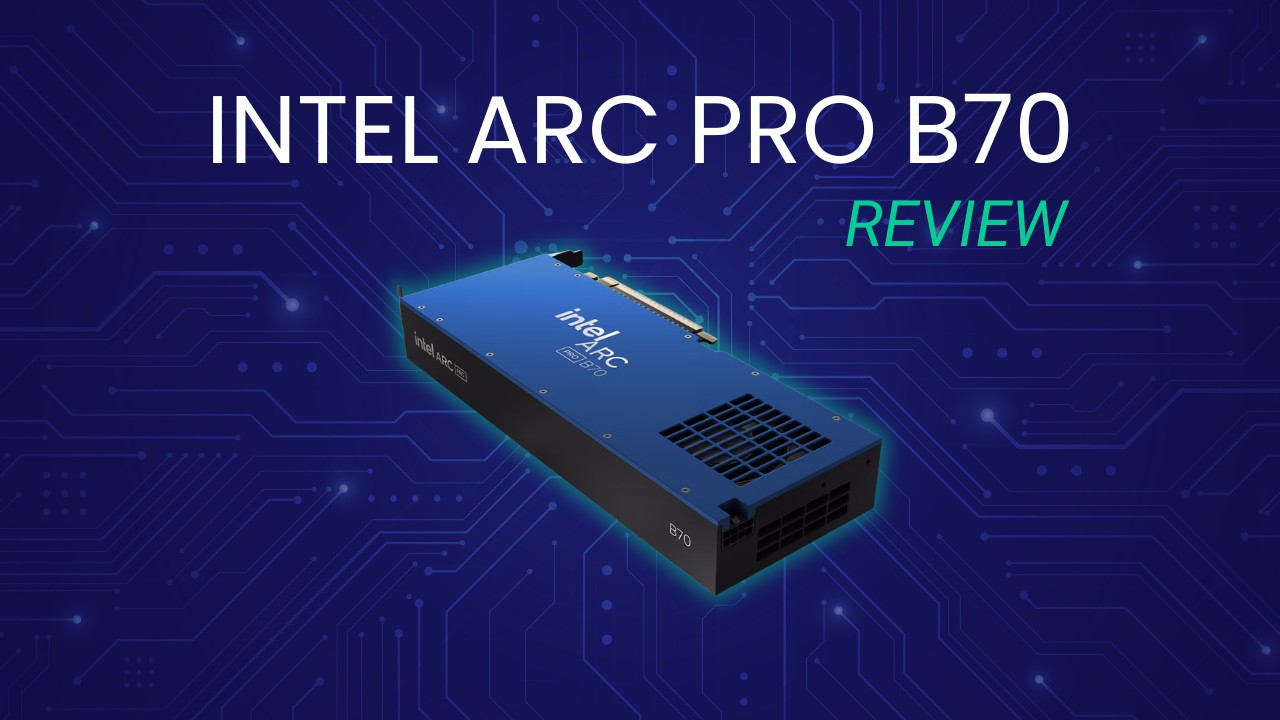
Intel’s Arc Pro B70 packs 32GB VRAM into a $950 professional GPU, undercutting AMD’s R9700 by 30% but trailing it in most workloads.
Key Takeaways
B70 is a new die with 2x the Xe2 cores and VRAM vs the B50, not a memory-padded retrofit; 256-bit bus, 608 GB/s bandwidth, 230W TDP.
Competitive in DaVinci Resolve and Blender (beats R9700 in some subtests), weak in After Effects (47% slower than RTX 2000 Blackwell).
At $950, it’s $200 more than the 16GB RTX 2000 Blackwell; matching 32GB VRAM on NVIDIA requires the 4500 Blackwell at 2.5x the price.
ECC memory and certified ISV drivers (Adobe, Autodesk, Dassault) make it a formal professional card, not a rebranded consumer part.
MLPerf is the most relevant benchmark given its 32GB positioning; the review notes Intel targets AI inference over traditional workstation workflows.
Hacker News Comment Review
The dominant concern is software maturity: Intel’s vllm fork is several versions behind mainline, dual-card setups reduce token rate rather than improve it, and latest Hugging Face models don’t run on it out of the box.
Commenters note 608 GB/s memory bandwidth is a bottleneck for LLM inference regardless of VRAM size; the 5090 offers the same 32GB with far higher bandwidth and beats it on tokens per second.
A less-discussed upside: Arc Pro cards support proper SR-IOV, making them useful for GPU-accelerated VMs across multiple workstations from a single card.
Notable Comments
@ycui7: vllm fork is 6 versions behind mainline, latest open models won’t run, and two B70s in parallel reduce token rate.
@greybcg: SR-IOV support makes B70 a clean graphical passthrough device for VM fleets with decent frametimes.
@dwoldrich: Community waiting for Xe3P / Nova Lake at workstation class for real on-prem inference power.