Cold water kills via autonomic conflict: two opposing cardiac reflexes fire simultaneously, not slow hypothermia; the first 60 seconds is the most dangerous minute.
Key Takeaways
Autonomic conflict (Shattock & Tipton, 2012): cold shock and diving reflex send opposing max cardiac signals at once, potentially triggering ventricular fibrillation in healthy hearts.
The initial gasp reflex pulls 2-3 liters involuntarily; face submerged at that instant means the swimmer inhales water, not air, which is how strong pool swimmers drown.
5-6 short cold dips over two weeks halves the cold shock response; effect lasts months and is the most underused safety intervention in open-water swimming.
Most cold-water deaths happen within the first 3 minutes at piers, harbours, and ferry decks, not open water; edges and entry points are where people die.
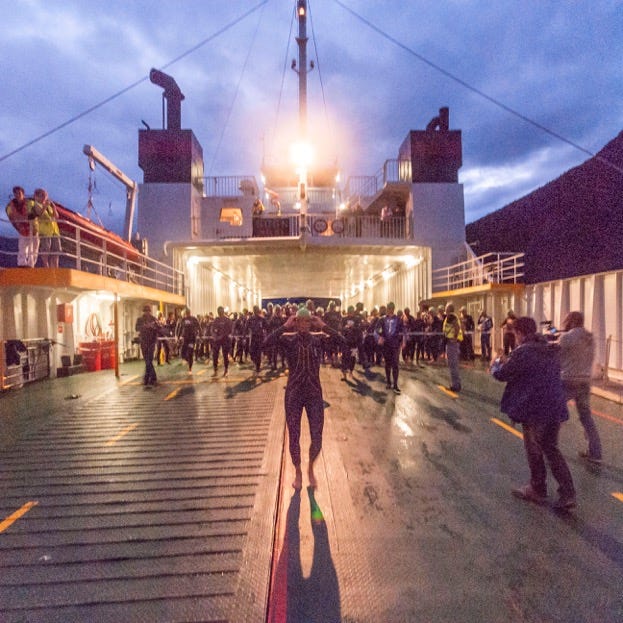
Pre-splashing face and neck for 30-60 seconds before entry primes the nervous system and cuts the gasp reflex; Norseman triathlon uses deck spraying for exactly this purpose.
Hacker News Comment Review
Commenters with alpine, scout, and lifetime swimming backgrounds report no uncontrollable gasp, raising an open question about whether habituation or individual physiology can suppress what the literature frames as an irresistible reflex.
Finnish avantouinti (winter swimming) surfaced as a cultural counterpoint; commenters noted only health-benefit framing in that tradition, leaving the cardiac risk tradeoff unaddressed.
The “strong pool swimmers drown 10 meters from a boat” claim drew mechanical skepticism about distance and sequence; the diving reflex blood pressure direction was also disputed as contradicting standard mammalian dive reflex framing.
Notable Comments
@x-n2o: questions whether the diving reflex constricts or dilates peripheral vessels, challenging the implicit blood pressure framing in the autonomic conflict model.
@time4tea: points to the RNLI “Float to Live” protocol as a practical companion resource for cold water shock response.