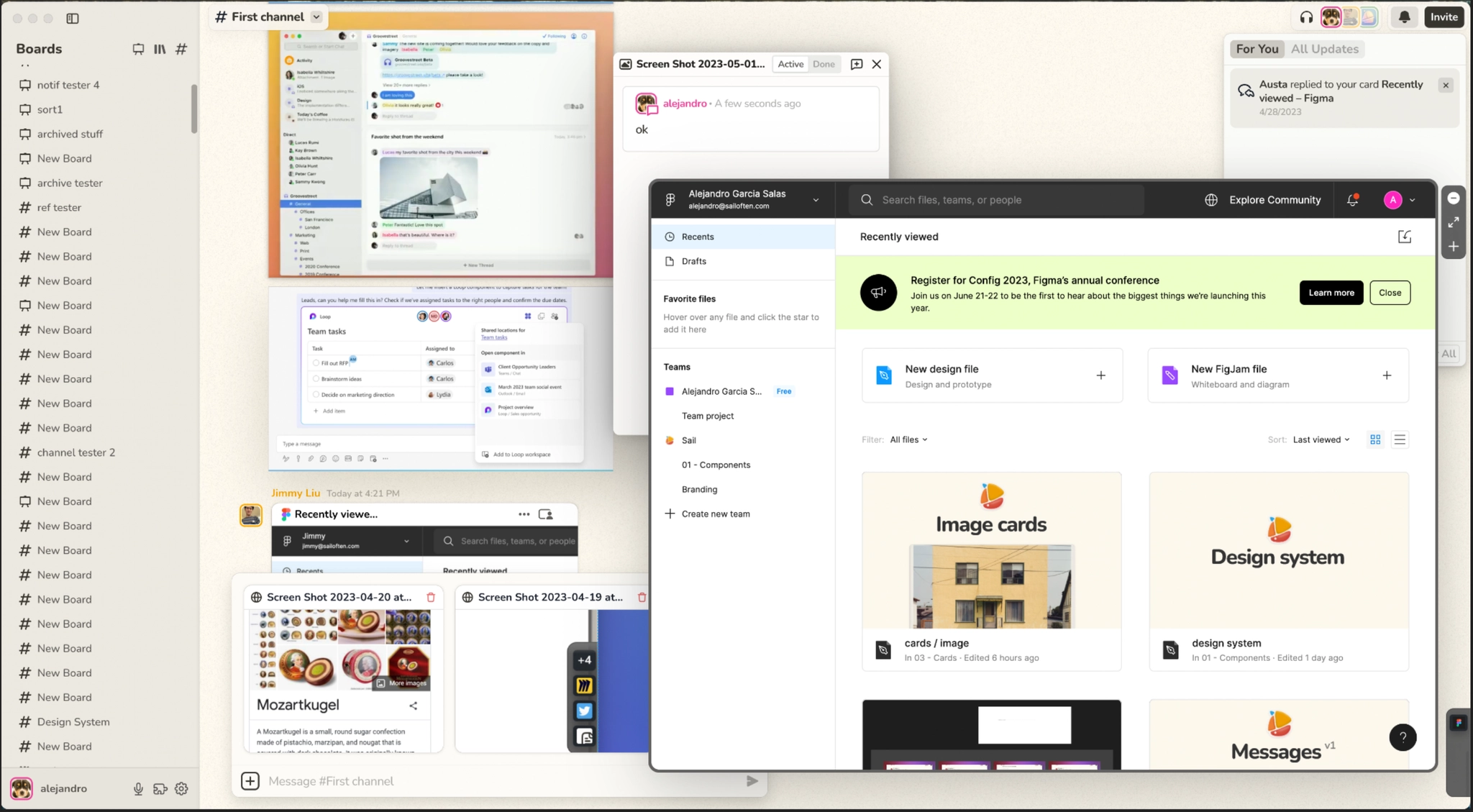
Founding engineer at Sail and Muddy shares hard-won lessons from building two multiplayer Chromium-based browsers that failed to find product-market fit.
Key Takeaways
Sail was FigJam-meets-browser on an infinite canvas; Muddy pivoted to Slack-plus-embedded-tabs – both hit the same positioning wall: market reduces you to a simple description.
The “novelty tax” is real: Arc, Mighty, Sail, and Muddy all built genuinely cool tech but couldn’t convert cool into durable behavior change at venture scale.
Launching too late is a compounding mistake – delayed launches build pressure, waste repositioning cycles, and leave fewer chances to relaunch under a cleaner frame.
Overindexing on table stakes (React Native mobile app) crowded out the harder positioning work that would have actually differentiated Muddy from Slack.
Kevin Kwok’s Arc of Collaboration thesis – browser as metalayer across all productivity apps – was intellectually compelling but didn’t survive contact with user behavior.
Hacker News Comment Review
Parallel builder @dimes (ohyay, canvas-based multiplayer social events during COVID) adds corroborating texture: WebRTC latency was manageable, and niche use cases like collaborative karaoke emerged organically from the canvas model.
Commenter @tekacs pushes on a sharp diagnosis – that Sail and Muddy felt “small” to users not in features but in perceived step-change, contrasting with Linear, Figma, and Notion which landed as unmistakably big leaps.
Notable Comments
@tekacs: asks whether the real failure was “feeling small/bounded” – not lacking features, but lacking the felt magnitude that made Figma or Linear seem like a step change.