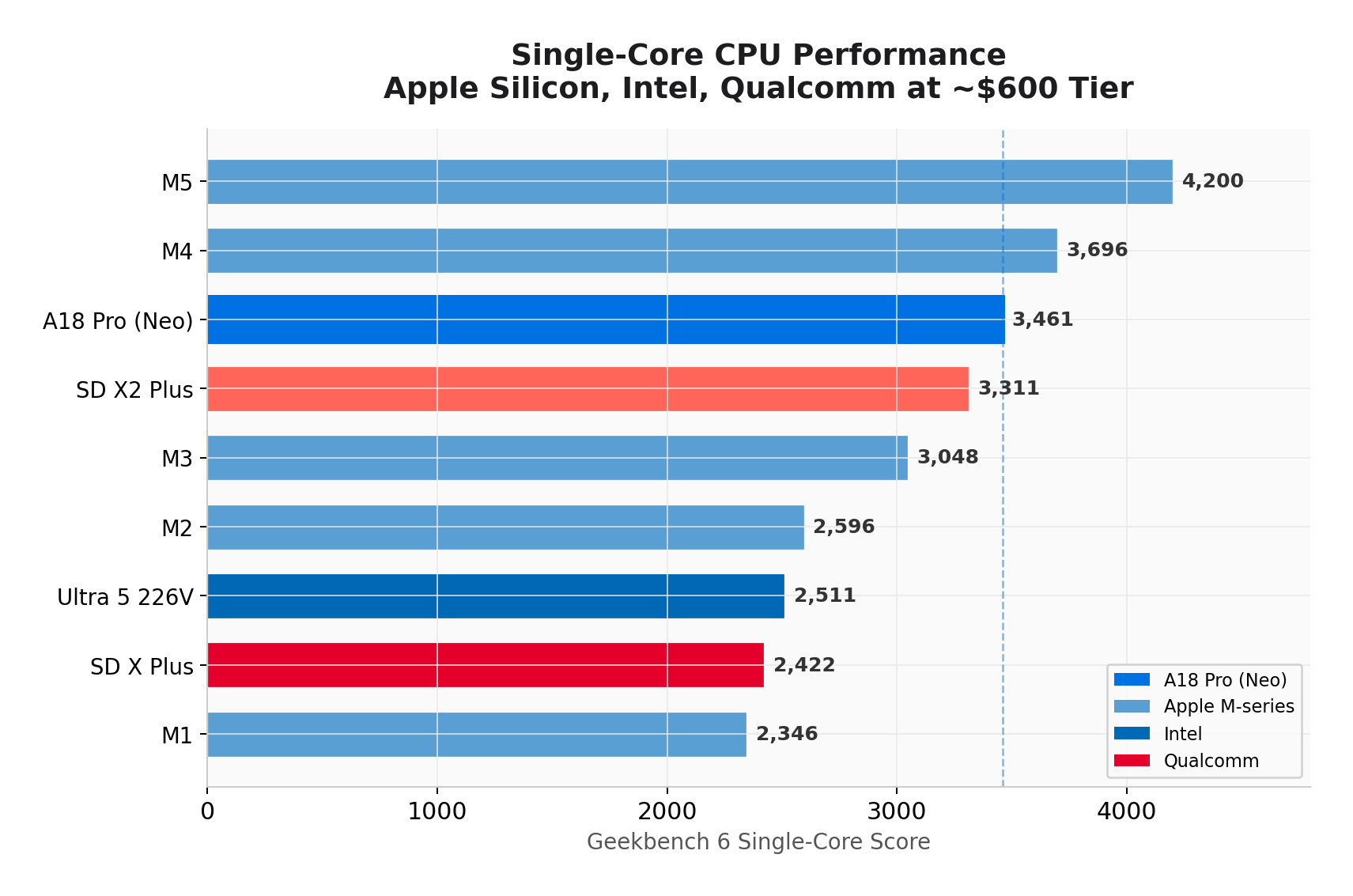
A18 Pro in the $599 MacBook Neo posts Geekbench 6 single-core of 3,569, between M3 and M4, but throttles 87% after 60 seconds of sustained load in its fanless chassis.
Key Takeaways
A18 Pro (TSMC N3E, 2P+4E cores, 16-core Neural Engine) beats Intel Lunar Lake Ultra 5 226V by 38% and Snapdragon X Plus by 43% on single-core at this price tier.
Thermal cliff is steep: all-core stress drops CPU utilization from 570% to 207% between T+60s and T+75s; case surface stays at 97.6F while the SoC hits 105C internally.
Multi-core at 8,668 is M1-class and trails the Snapdragon X Plus (11,345) and Intel Ultra 5 226V (9,702); the M4 Air is 70% higher.
Apple’s $599 price floor depends on A18 Pro wafer cost amortization across ~230M iPhones per year – no other OEM has comparable supply chain leverage.
8GB unified LPDDR5x is soldered with no upgrade path; after macOS overhead, available application memory is roughly 1.5-2GB.
Hacker News Comment Review
The 8GB ceiling is the dominant concern: commenters note macOS already consumes over 75% of RAM on a fresh boot, leaving almost no headroom if OS memory footprint grows over the product’s lifetime.
Longevity splits opinion: one commenter has run a 16GB M1 Air daily for six years with Docker, VS Code, Electron, and a macOS VM without major issues, but the Neo’s 8GB floor makes that comparison unreliable.
The USB 2.0 second port and absent Thunderbolt are flagged as real workflow blockers for anyone needing fast external storage; anecdotal USB 3 reliability issues on recent MacBooks compound the concern.
Notable Comments
@beloch: argues that OS memory growth even a few percent could trigger planned obsolescence legislation by eating into the already-thin application memory budget.
@darkteflon: bought an 8GB M1 Air in 2020 as a throwaway travel machine, used it as primary for two years, then passed it to his son – still running fine, suggesting 8GB is survivable for light workloads long-term.