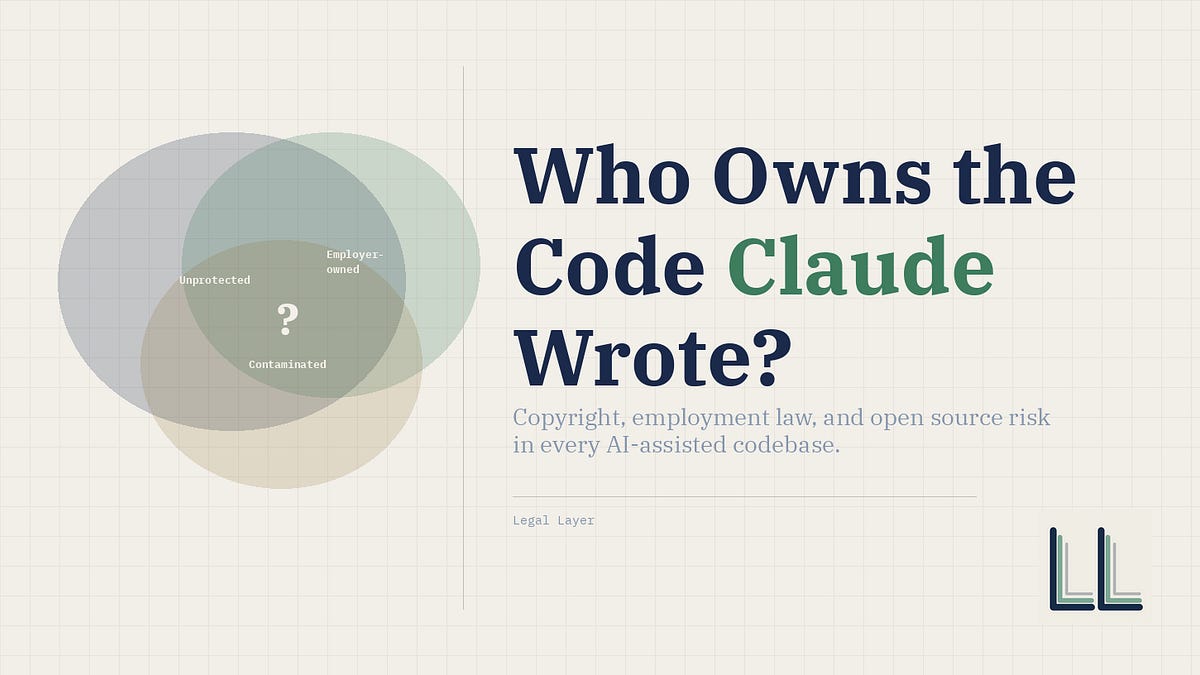
AI-generated code from tools like Claude Code, Cursor, and Codex may be uncopyrightable, employer-owned, or GPL-contaminated without the developer realizing any of it.
Key Takeaways
The US Copyright Office and Supreme Court’s Thaler denial leave one rule standing: no copyright without meaningful human authorship, meaning verbatim-accepted AI output may be public domain.
“Meaningful human authorship” requires directing architecture and rejecting output, not just writing a prompt. One-line prompts followed by merge probably do not qualify.
Work-for-hire doctrine plus broad IP assignment clauses covering “company-licensed tools” can give employers ownership over side projects built with employer-licensed Claude Code or Cursor.
GPL contamination risk is real: if Claude was trained on LGPL code and reproduces patterns from it, shipping that output in a commercial product without source release may constitute a copyleft violation. The chardet rewrite dispute made this concrete.
Four mitigations: run FOSSA/Snyk/Black Duck license scans, write descriptive commit messages documenting architectural decisions, read your IP clause before starting side projects, and use the Anthropic API or enterprise plan for commercial indemnification coverage.
Hacker News Comment Review
Commenters split on whether cert denial in Thaler actually settles the law. The framing that the issue is “now settled at the highest judicial level” was called a misstatement, since SCOTUS denial of cert does not bind lower courts on the merits.
A recurring objection: calling GPL exposure “contamination” misdirects blame onto OSS contributors rather than the parties who trained models on licensed code without authorization. The liability framing in the article was seen as backwards by several commenters.
Practical skeptics argued copyright over code rarely functions as a real moat in industry, and that courts will ultimately assign ownership to whoever has the most money, making the theoretical analysis less actionable than the article implies.
Notable Comments
@semiquaver: Cert denial “can happen for many reasons unrelated to the merits” and does not settle the issue nationwide, directly contradicting the article’s legal baseline.
@alienll: Draws analogy to Zarya of the Dawn: prompting Claude for a function is closer to prompting Midjourney for an image than to writing code, and engineers resist the comparison because of professional identity, not legal logic.