
Why the U.S. Can't Escape the Middle East
Watch on YouTube ↗ Summary based on the YouTube transcript and episode description.
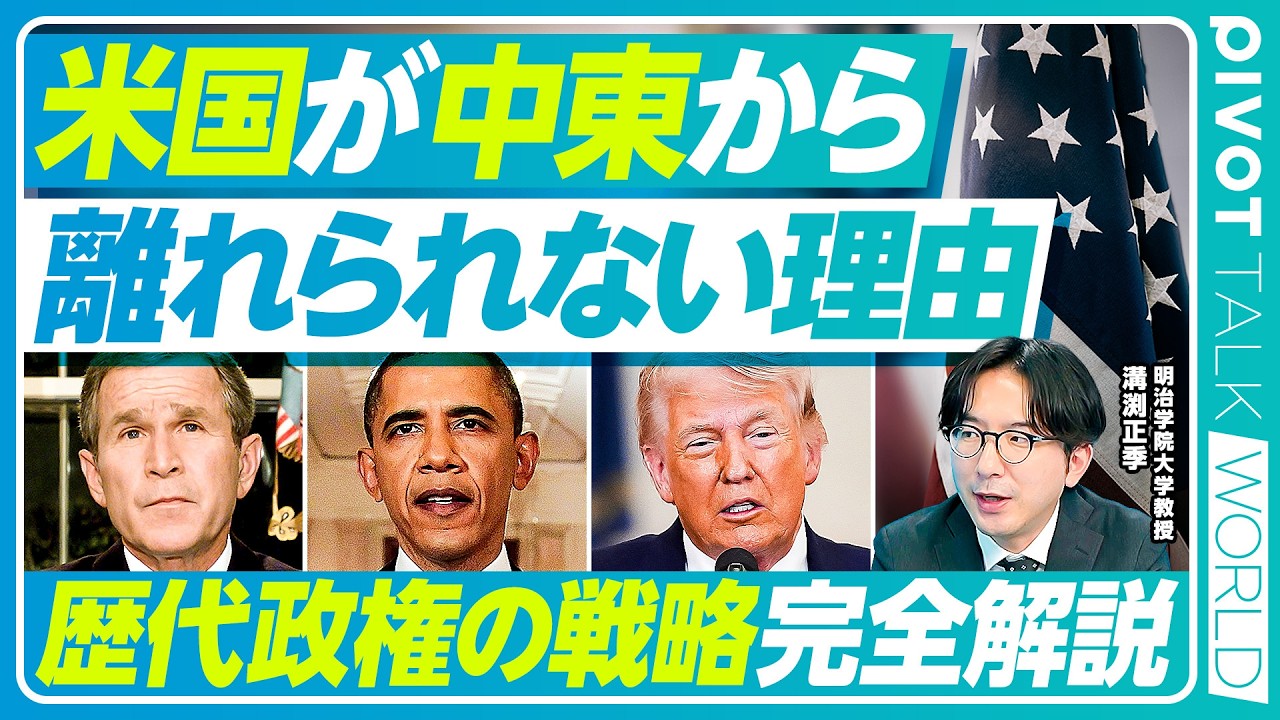
Masaki Mizobuchi, professor at Meiji Gakuin University, walks through the structural logic of U.S. Middle East strategy from the Clinton administration through Trump’s second term.
- Clinton’s “dual containment” successfully deterred Iraq and Iran, but stationing U.S. troops on the Arabian Peninsula fueled the rise of al-Qaeda
- After 9/11, the Bush administration pivoted hard to unilateralism and military force; the biggest beneficiary of the Iraq War’s chaos was Iran
- Obama declared a “pivot to Asia” in 2011, but his ambivalent response to the Arab Spring cost the U.S. much of its Middle East influence
- The 2015 Iran nuclear deal — the only concrete achievement of the Obama years, capping enrichment at 3% — was unilaterally abandoned by Trump in 2018 in favor of “maximum pressure”
- Biden failed to revive the nuclear deal, watched the Taliban retake Afghanistan almost immediately after withdrawal, and couldn’t find common ground with Saudi Arabia on values — leaving nothing behind
- The defining change of Trump’s second term is a cabinet composed entirely of yes-men, meaning the president’s impulses translate directly into diplomatic action with no internal check
- Netanyahu spent two decades pushing Washington to strike Iran; the June 2025 attack is widely read as him finally finding a president willing to listen
- Trump’s decision to strike Iran reflects a compound of pressures: evangelical voters, the Israel lobby, wealthy donors, and Jared Kushner’s influence
2026-04-24 · Watch on YouTube
Japanese page: 米国はなぜ中東を抜け出せないのか

