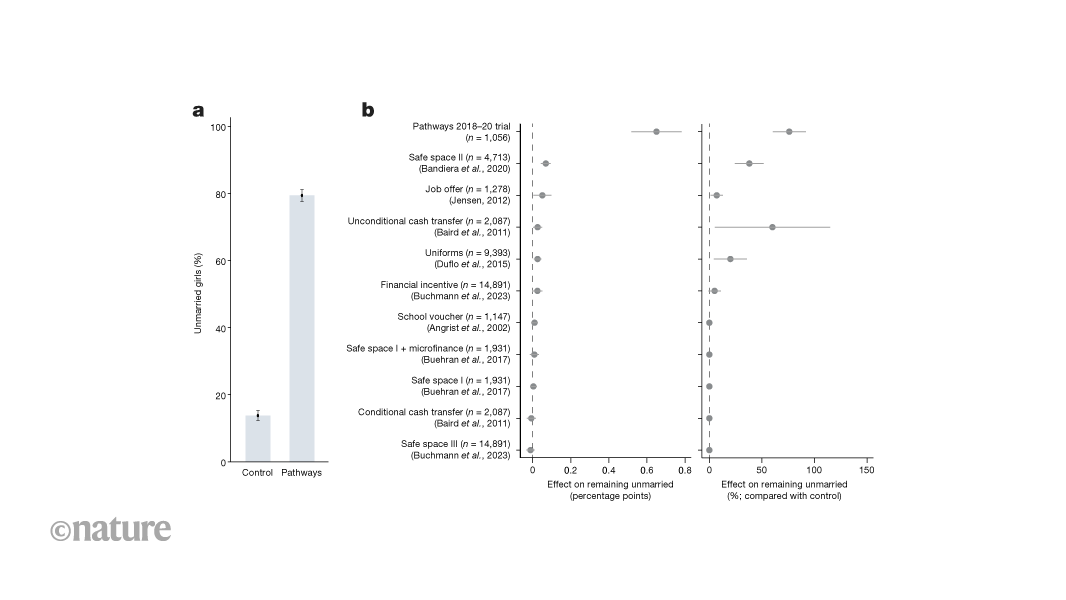
Nature RCT finds a multipronged education intervention in northern Nigeria cut adolescent girl marriage rates from 86% to 21% over two years.
Key Takeaways
The Pathways to Choice program ran in 18 communities across Kaduna, Kano, and Borno states (2018-2020), targeting 1,181 unmarried girls aged 12-17 not currently in school.
Intervention combined community engagement, remedial education, and social and in-kind support simultaneously; school attendance rose 70 percentage points.
Program returned $1,627 per $1,000 invested; benefit-cost ratio of 2.41 over estimated lifetime participant advantages.
Authors note context dependency: settings where education is already high-quality or not socially accepted as an alternative to marriage are less likely to replicate these results.
Hacker News Comment Review
Commenters with NGO research backgrounds independently corroborate that gender-focused and infrastructure interventions consistently outperform other aid categories on long-term economic impact, with roads notably reducing violence in conflict zones.
Several commenters pushed back on the headline framing: the program was not simply “school” but a targeted removal of cost, social, and safety barriers that made school attendance impossible, which is the actual mechanism.
Debate emerged around whether reduced fertility is an acceptable tradeoff; commenters noted that Nordic child-support programs have not reversed low birth rates, suggesting educated women’s fertility choices are structural, not policy-correctable at scale.
Notable Comments
@svnt: Notes this is not isolated; a long record of studies shows years of female education delay marriage through social support and self-reliance, not just by occupying time.