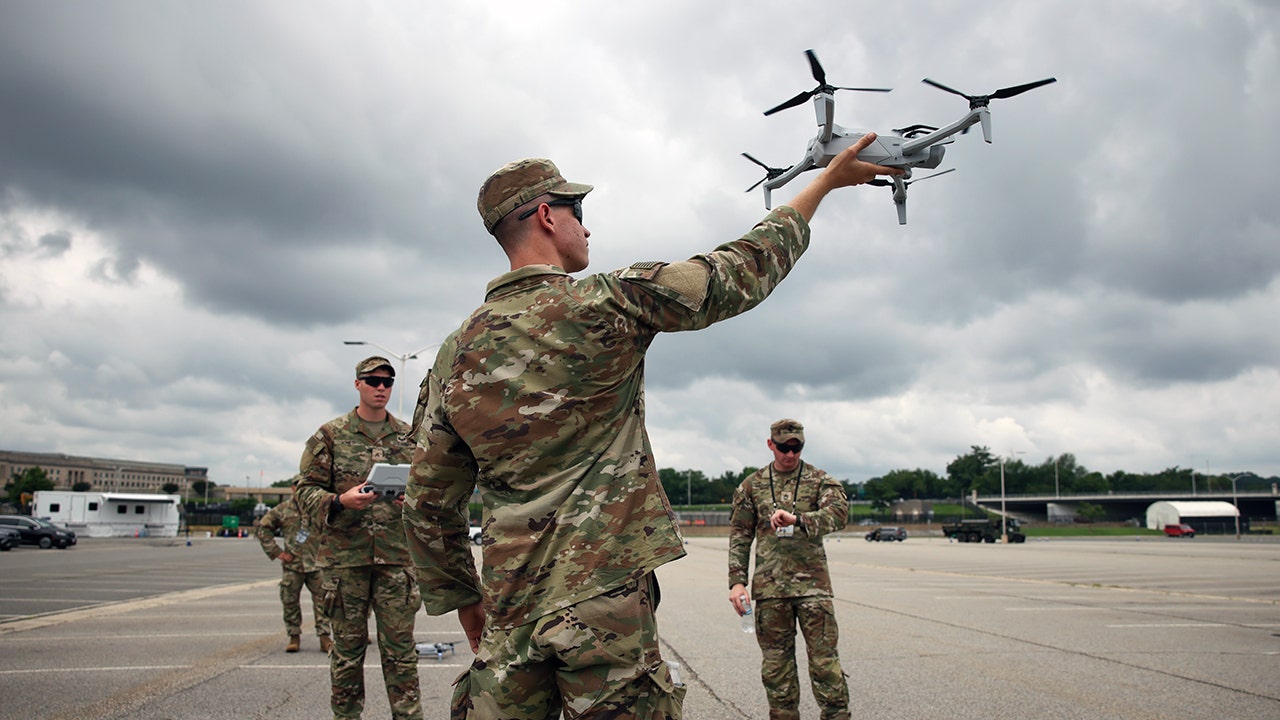
Pentagon’s FY2027 budget requests $55B for drone and autonomous warfare, up from $225M, driven by cheap-drone saturation in Ukraine and the Middle East.
Key Takeaways
The Defense Autonomous Warfare Group is the coordinating office; funding spans procurement, R&D, training, and sustainment across all services.
Doctrine shift: away from small fleets of expensive platforms toward large swarms of low-cost, AI-coordinated systems that can attack from multiple vectors.
Core problem is asymmetric cost: US and allied defenses fire expensive interceptors at cheap incoming drones, draining stockpiles faster than they rebuild.
China has demonstrated swarm operations involving hundreds of coordinated drones; Poly Technologies disclosed a ~1M kamikaze drone order for 2026 delivery.
Russia introduced “carrier” drones that launch smaller attack drones mid-flight, extending range and complicating layered defenses further.
Hacker News Comment Review
Commenters widely flagged that $225M was shockingly low given a decade of public evidence that drones were the dominant emerging threat – the jump reads less like vision and more like catching up.
Skepticism runs deep that the money will flow efficiently: the prior $500B+/year baseline failed to anticipate the drone inflection, and adding a new budget line without cutting legacy programs is seen as political path-of-least-resistance rather than real reform.
A structural concern raised: future wars will be decided by industrial throughput and economic resilience more than troop readiness, meaning the real competition is manufacturing capacity, not battlefield doctrine.
Notable Comments
@tristanj: cites China’s Poly Technologies order for nearly 1 million kamikaze drones to be delivered by 2026, a concrete production benchmark the article does not name.
@nullocator: argues the $500B-1T annual defense spend of the last 20 years “wasn’t keeping anyone safe” if Ukraine and Iran were the first wake-up calls.